Breakthrough in Quantum Computing: Logical Qubit Survival Rate Reaches 96% on IBM Heron
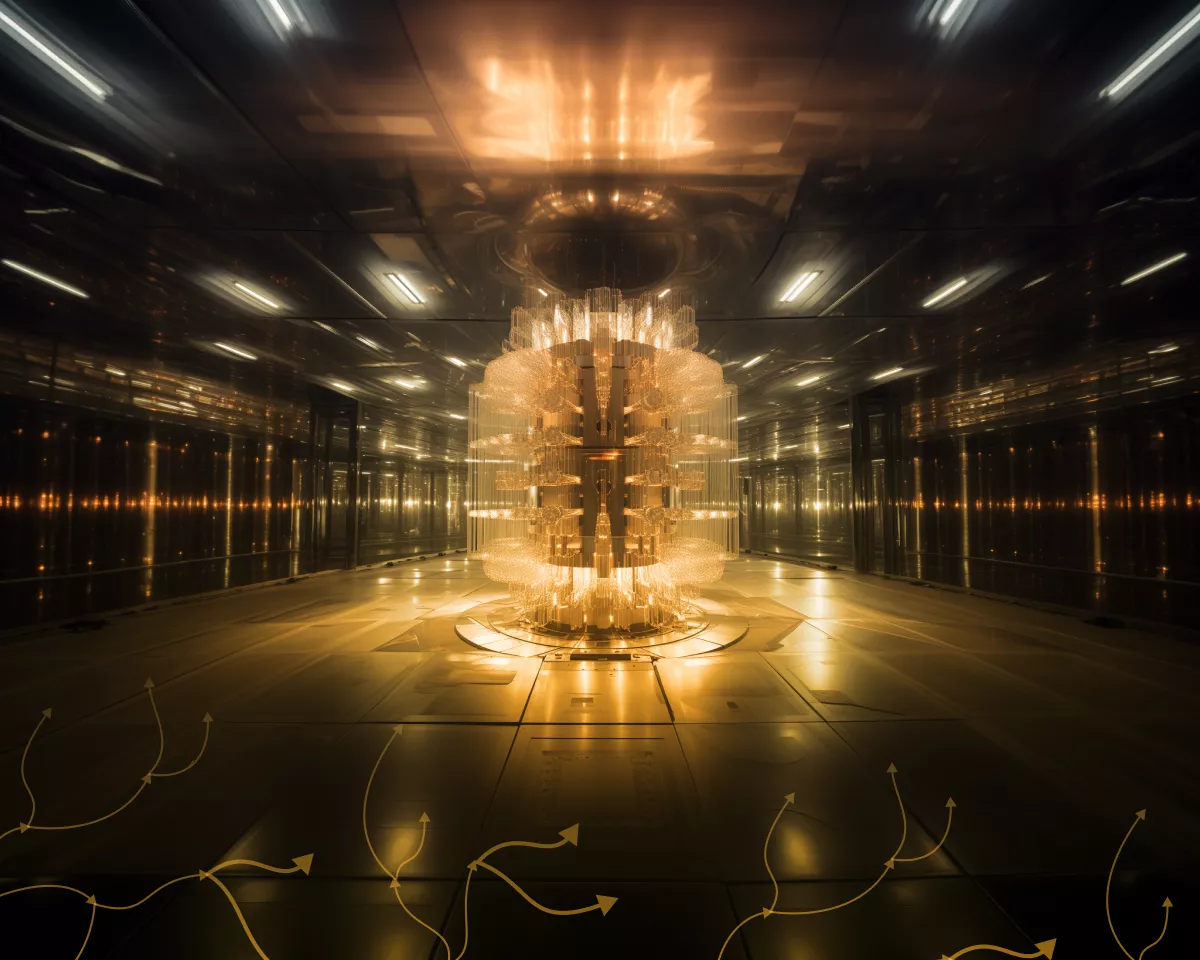
Quantum computing is taking a significant step forward. In recent experiments on the IBM Quantum Heron r2 processor, the preservation of logical qubits was improved to 96% per error correction cycle. This achievement was made possible by a fundamentally new approach to the architecture of error correction circuits, developed jointly with researchers from the University of Sydney.
The main problem faced by developers of quantum machines is the so-called "idle noise." In modern systems, for error correction, the processor is forced to regularly pause computations for internal checks. During these pauses, the remaining qubits lose stability, generating new errors. This effect has long remained a key obstacle to creating fault-tolerant quantum computers (FTQC).
To solve this problem, physicists completely reworked the system's operational logic. They radically reduced computation pause time by optimizing intermediate measurement algorithms. As a result, on the 156-qubit superconducting processor IBM Heron r2, the survival rate of logical qubits was raised from less than 90% to 96%. This is not just a number—it is a demonstration that "idle noise" can be effectively suppressed, not merely compensated.
As the project leader emphasized, the correction process occurs multiple times at each stage of computation, and each forced pause creates a "serious obstacle" to reliable operation. The new architecture minimizes these pauses, which is critically important for scaling systems.
It is important to understand that this result was obtained in laboratory conditions on a single processor. However, it is precisely such research that lays the foundation for the future. Scalability and fault tolerance remain the main barriers to the commercialization of quantum computing, and every percentage point increase in qubit preservation brings us closer to solving this problem.
Expert opinion: Achieving 96% survival is not just an incremental improvement but a paradigm shift in the fight against decoherence. If this method can be scaled to processors with thousands of qubits, we will witness the first practical quantum advantage within the next couple of years. IBM is likely on the right track toward its stated goal—the end of 2026.